AC Maintenance in Kansas City: Protecting Your System From Dust and Debris
Kansas City summers don’t arrive quietly. One week the air feels tolerable, the next week your thermostat is begging for relief, and your air conditioner is suddenly doing the kind of work it usually only does on the hottest afternoons.
The trouble is, by the time you notice the problem, the damage is often already underway. Dust, yard debris, pet hair, construction grit, and even seasonal pollen can pile up across the indoor coil, outdoor condenser, blower wheel, and filter system. When airflow drops or heat transfer suffers, the unit compensates by running longer and harder. That extra strain shows up as higher energy bills, weaker cooling, and components that wear faster than they should.
AC maintenance in Kansas City is not about buying a tune-up and forgetting it. It is about keeping airflow clean, keeping electrical connections stable, and catching small issues before they become emergency HVAC repair calls in the middle of a heat wave.
Why Kansas City air is harder on AC systems than you might think
In most places, outdoor air is simply outdoor air. Here, it carries more variety through the year. Kansas City and the surrounding metro see seasons with dramatic shifts, plus plenty of dust and debris in between. Outdoor units sit in real environments, not clean factory test chambers.
A few common conditions I run into, often within the same month:
- Outdoor condenser sections can collect dirt along the fins, especially if you live near a busy road, construction sites, or homes with landscaping that sheds.
- Indoor return vents and supply registers pick up dust that people vacuum around, but don’t actually remove from the duct system. Over time, that dust coats blower parts and reduces efficiency.
- “Normal” pollen season can turn a once-clean filter into a restrictive layer quickly, particularly for households with allergies.
Even if you change your filter regularly, fine particles can still bypass in two ways. First, older ductwork and poorly sealed plenums can leak unfiltered air. Second, a filter that is the wrong size or installed loosely gives dust a shortcut.
When the system loses airflow, the indoor coil struggles to absorb heat. The outdoor unit then sees higher head pressure, which can stress the compressor and raise operating temperatures. The result is a unit that cycles more often, runs longer, and eventually starts asking for repairs.
The maintenance problems that don’t look dramatic at first
When homeowners call for AC repair in Kansas City MO, the reported symptoms are usually straightforward: not cooling enough, warm air, strange noises, or the system turning off unexpectedly. What gets missed HVAC contractor in Kansas City MO is the pattern behind the symptoms.
A clogged indoor coil or restricted airflow can look like “the AC is weak.” But it can also be what pushes a refrigerant system into conditions it was not designed to spend hours in. A partially failed capacitor may still run, but it does it with reduced starting torque and extra electrical stress. A low level of refrigerant, whether caused by a leak or a previous repair, will be made worse when the system’s airflow is impaired.
I’ve seen situations where everything “checked out” during the first quick visit. The system would cool during the test, then struggle the next day when the outdoor load got heavier. In cases like that, maintenance matters because it removes variables. Clean coils and solid airflow make performance more predictable, and that helps both the homeowner and the technician.
What dust and debris actually damage over time
A modern HVAC setup is a team of components. Dust and debris typically attack the weakest links first, and those links can vary depending on system age and design.
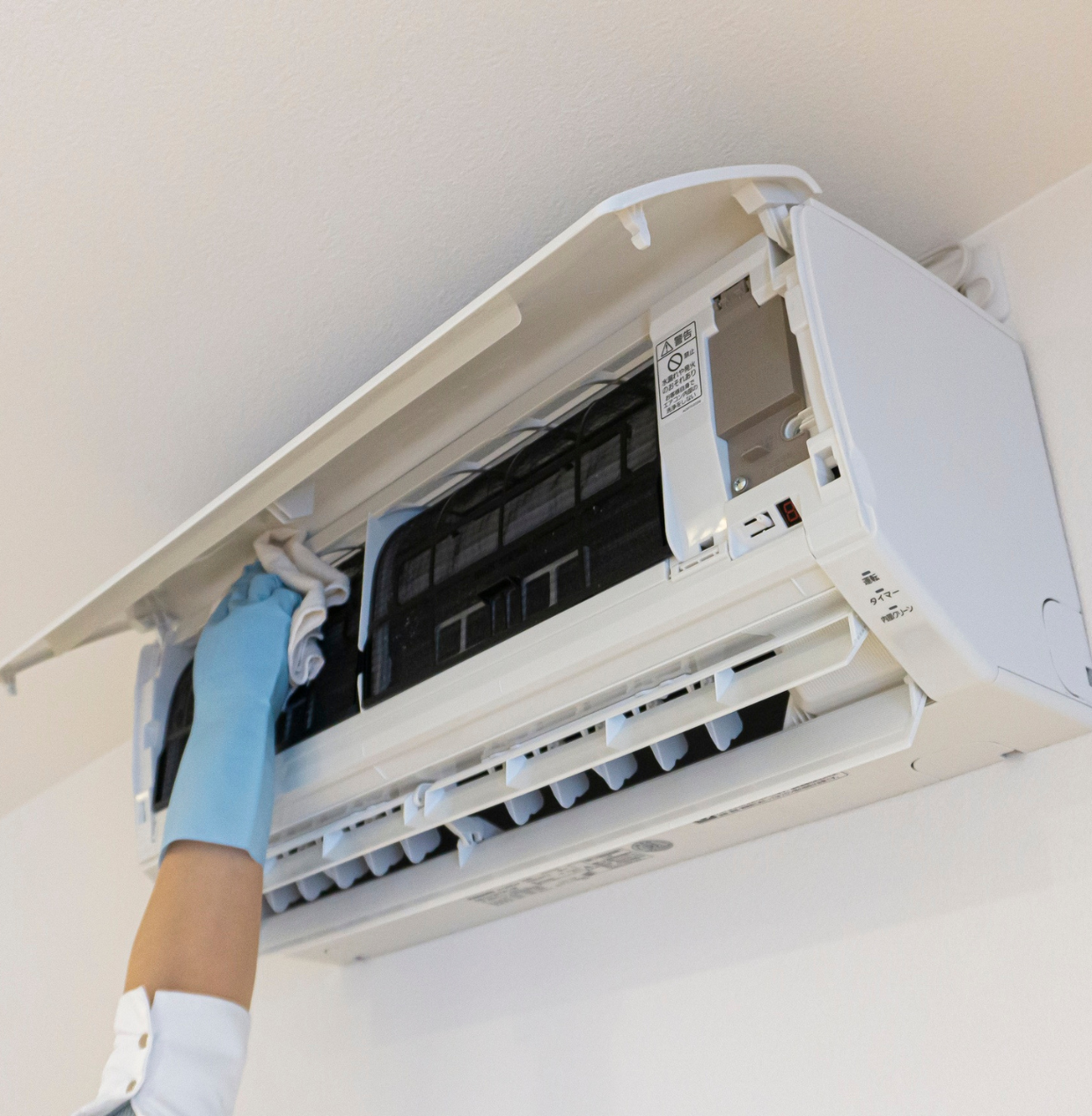
Outdoor condenser coils and fan areas get the first hit. Dirt blocks airflow and acts like insulation. Less airflow means the condenser can’t shed heat efficiently. The compressor works harder to overcome that, raising stress on electrical components and shortening service life.
Indoors, the blower wheel and drain pathway collect grime. If the condensate drain pan or line gets restricted, you can get water backing up. In cooling seasons, that can lead to moisture issues, musty smells, and sometimes algae or microbial growth. People sometimes attribute odors to “mold somewhere in the house,” but in many homes, it starts right at the evaporator system.
Air filters do a lot, but they are also a balancing act. Filters that are too restrictive can create the same airflow problem as dirty coils. Filters installed incorrectly can bypass. Filters that are never changed turn into thick media that drops performance quickly.
Dust is not just a cleanliness issue. It is a thermodynamics issue. It changes how heat moves, and your AC responds by working harder.
Signs you need AC maintenance before a breakdown
A system usually gives warnings before it fails completely. Many of those warnings are subtle enough that people assume it is “normal” or attribute it to humidity. With Kansas City’s summer humidity, it’s easy to blame the weather. Still, the details matter.
Here are signs I take seriously because they often correlate with dirty coils, restricted airflow, or an electrical or refrigerant problem beginning to show itself:
- You feel air coming out, but the house never reaches the thermostat setpoint on hot afternoons
- The system runs longer cycles, then short cycles, especially after it has been off overnight
- You notice ice forming on the indoor coil or a frosty appearance around the unit
- The indoor air feels stale, and airflow seems weaker even though the fan speed setting hasn’t changed
- The outdoor unit has a pattern of unusual noise, rattling, or fan delays during startup
If you see one or two of these, maintenance is still worth it. If you see several together, you are usually looking at a repair situation that should not wait.
How routine maintenance reduces HVAC repair in Kansas City MO
Homeowners sometimes treat maintenance as a “nice to have.” The reality is that maintenance is risk management. It reduces the chance that you end up with a failed component at the worst possible time.
That risk reduction comes from several practical areas:
Clean coils and correct airflow help the refrigerant system maintain normal pressures and temperatures. That matters because many refrigerant issues are triggered or made worse by improper operating conditions. When airflow is good, the system is less likely to run out of its safe operating window.
Electrical checks matter too. Capacitors, contactors, and other components can fail without much warning, but deterioration is often detectable through inspection and testing. Loose connections can cause intermittent symptoms that are frustrating to diagnose because the unit works sometimes.
Drainage inspection is another big one. A clogged condensate line can create water problems and can also affect system performance indirectly. Moisture can damage components in places you do not immediately think of, like the nearby control area.
Last, maintenance gives you an opportunity to confirm that the thermostat and controls are behaving correctly. Wrong settings are common, but so are control board symptoms that only appear under load. A maintenance visit is when those issues can be caught early.
If you are searching for an HVAC contractor in Kansas City MO, look for a provider who treats maintenance as a systematic inspection, not a quick scan. With the right process, AC maintenance in Kansas City becomes a reliable part of keeping your cooling stable year after year.
Outdoor unit care: where most neglect starts
The outdoor condenser sits where the weather and debris do their worst work. It is exposed to Kansas City dust storms, yard clippings, and in some neighborhoods, the fine grit that comes with nearby gravel or landscaping.
A few maintenance tasks are simple and safe for homeowners. Clear the area around the unit so air can move freely. Keep mulch, leaves, and grass clippings from collecting around the base. If you have bushes, maintain clearance as recommended by the manufacturer. I’m not talking about decorative distance, I mean real clearance that supports proper airflow across the coil.
Avoid spraying the unit with aggressive chemicals or high-pressure water. Fins can bend easily, and if you damage them, you may reduce performance and make corrosion worse. If you want coil cleaning, it should be done with appropriate methods and attention to the downstream effects, including where runoff goes.
When the outdoor unit is clean and free of airflow restrictions, you often see a measurable difference in how the system maintains temperature during peak heat.
Indoor airflow: filters, returns, and the blower wheel
Indoor airflow is where comfort lives and where performance quietly declines.
The filter is the most visible part of that equation, but it is not the only one. A filter that is the correct size and installed properly matters. So does the return path. If a return vent is blocked by furniture, rugs, or storage, the system compensates by pulling air from wherever it can, often stressing the blower.
Blower wheel buildup is another common issue. Over time, it collects dust that affects airflow. It can also change balance, which can lead to vibration and noise. When homeowners describe a “new” sound, it is not always a mechanical failure. Sometimes it is dirt and buildup changing how the blower operates.
If your home has allergies, pets, or frequent cooking smoke, plan on checking your filter more often in peak seasons. The filter you could comfortably use for months in spring may be too restrictive by mid-summer. Kansas City pollen and humidity can make that change happen faster than people expect.
A realistic maintenance rhythm for Kansas City summers
You can maintain an AC system once a year and still see improvement, but timing changes results. In Kansas City, I typically suggest thinking in terms of two phases, pre-season and active-season checks. Pre-season is when the system is most likely to be ready for peak load. Active-season checks catch issues that show up once it has been running continuously.
Here is a maintenance rhythm that fits most homes without turning your life into a calendar exercise:
- Schedule maintenance before the hottest weeks, ideally in late spring
- Check your filter early in summer and replace it based on condition, not just dates
- During peak usage, listen and watch for symptoms like short cycling or reduced cooling
- Keep the area around the outdoor unit clear of debris and obstructions
- After a major storm, heavy wind, or a period of dust, inspect for obvious debris buildup
This is not about doing everything every time. It is about being proactive when conditions are ripe for performance loss.
When maintenance is not enough: the line between tune-up and repair
There is a point where maintenance can improve performance but cannot solve the underlying issue. A tune-up helps with dirt, minor adjustments, and early wear. It does not fix a failed compressor, a refrigerant leak, or a control board that is intermittently failing.
A practical example I’ve seen involves ice formation on the indoor coil. If icing happens consistently, it is often related to airflow restriction, low refrigerant, or a metering issue. Cleaning the system and replacing the filter may solve it temporarily if airflow was the driver. If it returns quickly, that is a strong signal that you need HVAC repair attention rather than repeating maintenance steps.
Another example involves electrical symptoms. Some systems start fine, then shut off after a short period. That could be a clogged drain, an overcurrent condition, or a temperature sensor reading. Maintenance can check certain parts, but proper electrical and control diagnostics are what confirm the cause.
When you work with a good HVAC contractor in Kansas City MO, you want maintenance and repair to live in the same mindset. Maintenance should not just be “spray and look.” It should be grounded in system testing and performance checks.
What to ask an AC contractor before you book
Not all maintenance is equal. Two companies can both call the service “tune-up,” but their process and the tools they use can be completely different. You do not have to quiz someone like you are hiring a lawyer, but a few targeted questions improve your odds.
If you want to avoid vague visits that leave you wondering what was actually done, ask these types of questions:
- Will you inspect and clean indoor coil and blower components, and check airflow across the system
- How do you test electrical components like capacitors and confirm safe startup behavior
- Do you inspect the condensate drain line for restrictions and verify proper drainage
- Will you check thermostat operation and confirm it is controlling properly under load
- Do you document findings and recommend next steps based on actual measurements
A professional contractor will be comfortable explaining their approach in practical terms. If answers sound scripted or avoid performance-related details, that is a warning sign.
Cost trade-offs: why skipping maintenance is usually more expensive
Maintenance costs money, and the temptation is real. When your AC is working, it feels easy to postpone. But the math usually tilts the other direction when you factor in the cost of emergency HVAC repair, higher energy bills from reduced efficiency, and the likelihood of additional component wear.
Dirty coils and restricted airflow increase run time. Run time increases compressor cycles and fan operating hours. Electrical systems also take on extra stress when the unit is pushing to maintain cooling.
There is another subtle cost, comfort. If the AC struggles to keep up, your home will feel warmer and more humid. That can lead to thermostat changes, higher fan settings, and a cycle of “keep trying harder.” Over time, that can turn a solvable maintenance issue into a larger repair.
In Kansas City, where summer peaks can last long enough to test patience, waiting too long can be a gamble.
A quick lived-experience checklist you can do today
If you want a simple sanity check right now, walk through your home and observe the AC during operation. You do not need tools. You need attention.
Is the airflow weak? Do you hear the fan working harder than it used to? Does the system cycle more frequently as the day heats up? Do you smell mustiness when cooling starts after being off? Are the vents blowing cold quickly, or does it take time and then never quite catch up?
Then head outside. Confirm the outdoor unit area is free of leaves and debris. Look for obvious signs like bent fins, standing water around the unit base, or plants encroaching on airflow paths. If you have a cover on the unit, make sure it is not blocking airflow or trapping moisture.
These observations help you decide whether you are dealing with routine maintenance needs or whether you should plan for HVAC repair sooner rather than later.
Keeping your investment protected through the off-season
AC maintenance in Kansas City is not only a summer topic. The off-season is when you protect the system from the conditions that build problems quietly.
If you had a storm-heavy fall or windy spring, check the outdoor unit for debris. If you run a furnace in winter, keep an eye on dust and filter changes that impact shared ductwork. Many homes experience dust buildup from winter heating, then carry it into summer. When cooling starts, that dust is already present in the system and ready to coat surfaces.
Also consider how you use your thermostat. Sudden swings and constant changes may not directly “break” a system, but they can add extra cycling, especially in older equipment. Stable thermostat behavior supports efficient operation and reduces wear.
If you are planning AC installation in Kansas City, maintenance mindset should be part of the purchase. Ask about filter requirements, coil protection, and what type of maintenance schedule best matches your home’s airflow and usage. A properly installed system with the right setup for your ductwork will stay cleaner longer and run more predictably.
The practical bottom line
Dust and debris are inevitable in Kansas City, but system wear is not. Good maintenance keeps airflow strong, keeps coils exchanging heat effectively, and reduces the odds that your compressor and electrical components get pushed into stressful conditions.
If you want fewer heat-wave breakdowns and more consistent comfort, prioritize AC maintenance in Kansas City before the hottest weeks. Use filter changes as a performance tool, keep the outdoor unit clear, and choose an HVAC contractor in Kansas City MO that treats maintenance as inspection plus verification, not a quick pass.
That approach does more than prevent repairs. It keeps your cooling stable when you need it most.
All 4 One Heating & Cooling
5828 Woodland Ave, Kansas City, MO 64110, United States
816-699-8366
[email protected]
Website: https://all4onekc.com/